
You’ve probably had this conversation with yourself in the booking window. Swedish, or deep tissue?
You pick deep tissue, because the tight spot in your shoulder has been there for eight months and gentle hasn’t touched it. Or you pick Swedish, because last time you booked deep tissue you were sore for three days and you’re not sure that helped either.
Then you go. And it’s good. You walk out a little looser but a day or two later, it’s back.
So next time you book deeper. And the time after that, deeper still.
If that’s the loop you’re in, the problem isn’t that you picked the wrong one. It’s that pressure was never the thing that decides whether the change holds.
Deep Tissue Massage vs Swedish Massage: What Each One Actually Does
Let’s be fair to both, because the internet usually isn’t.
Neither deep tissue massage nor Swedish massage is better than the other. It depends entirely on what you’re getting the massage for — and on the practitioner giving it. A skilled Swedish therapist will do more for you than a careless deep tissue therapist, every time.
In terms of how they affect the soft tissue, the difference is real but simpler than it sounds. Deep tissue engages the muscles more because of the heavier pressures applied. Swedish techniques are mostly more superficial. That’s the honest version.
Swedish is built to downshift your nervous system. Long, gliding strokes, moderate pressure, a calm rhythm. It’s genuinely good at what it does, and calming your nervous system is not a lesser goal — it’s a clinical prerequisite for anything else to work.
Deep tissue goes after the tissue with more intent. More pressure, slower strokes, more focus on the layers underneath.
Both are doing something. Neither, by itself, resolves why the tissue got that way.
Why the Relief Fades
Here’s the part that rarely gets said out loud.
A lot of people equate hard pressure and pain with therapeutic value. That’s an understandable assumption, and the evidence doesn’t support it.
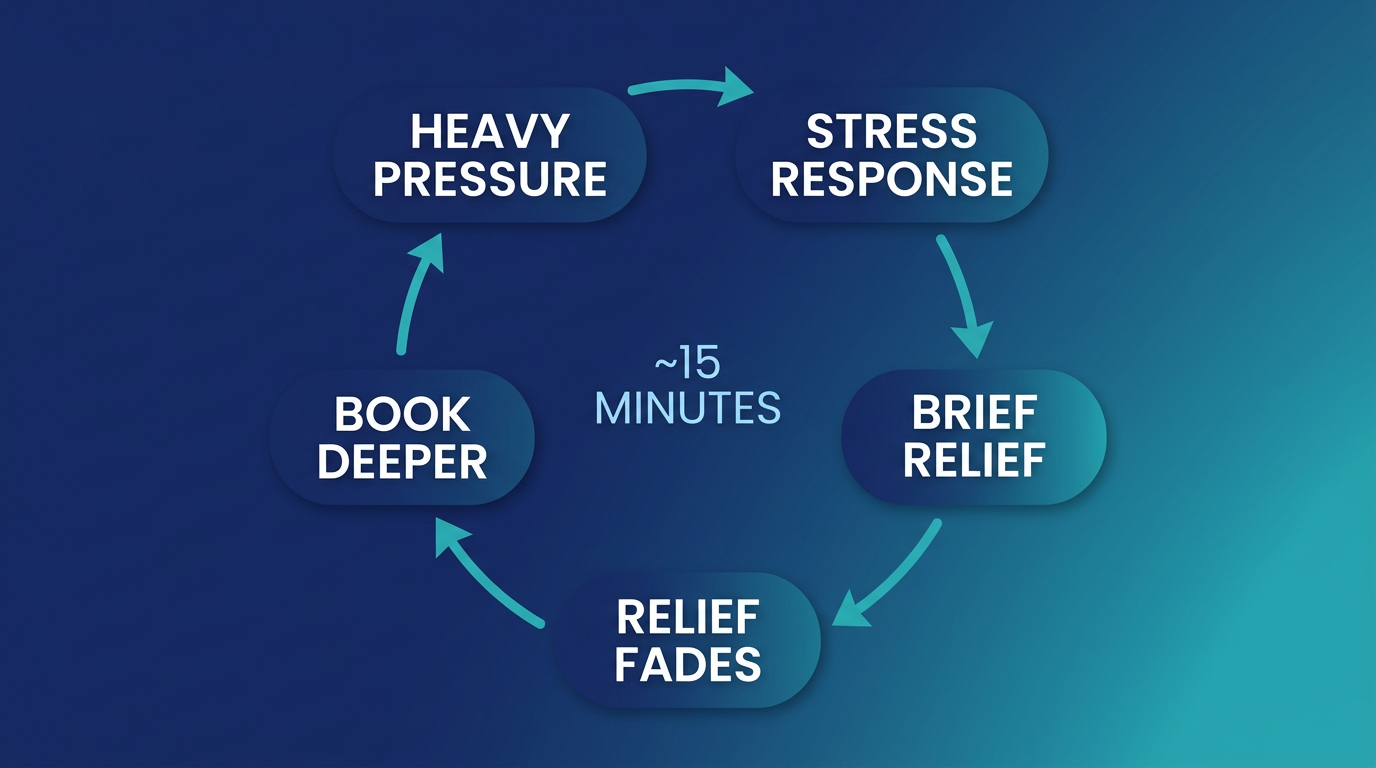
The relief is real, but the window is short. In controlled testing, heavy deep-tissue work raised pain threshold by around 20% — for roughly fifteen minutes. What’s telling is that working the opposite limb produced nearly the same effect. If pressure were changing the tissue, that shouldn’t happen. Much of what you feel is your nervous system turning pain volume down, not structure changing under the thumb.
Intense pressure provokes a stress response. One study of 150 adults found that the more painful techniques — trigger point and sports massage — were associated with raised blood pressure during the session. That’s your body reading the input as a threat. Some of what feels like a powerful session is your system bracing, and bracing works against the release you came in for.
And when pain has been around a long time, the nervous system usually becomes more sensitive, not less. This is the part that surprises people. If you’ve been hurting for years, your pain processing has likely turned up — and aggressive pressure can reinforce that rather than override it.
So the pattern isn’t that you’ve built up tolerance and need a therapist with stronger hands. It’s that the window was always short, and forcing it harder can wind the system up further. You’re chasing a fifteen-minute effect with more force each time, while the reason the tissue is guarding hasn’t been addressed once.
There’s also a limit worth naming plainly. Excessive pressure can injure tissue. The published case reports are rare — nerve injuries, muscle breakdown, vascular complications, most often from very aggressive work or the neck — and they’re not what happens in a typical session. But they establish the direction: past a point, more force stops adding benefit and starts adding damage your body then has to spend energy repairing.
The Part Most Massage Misses
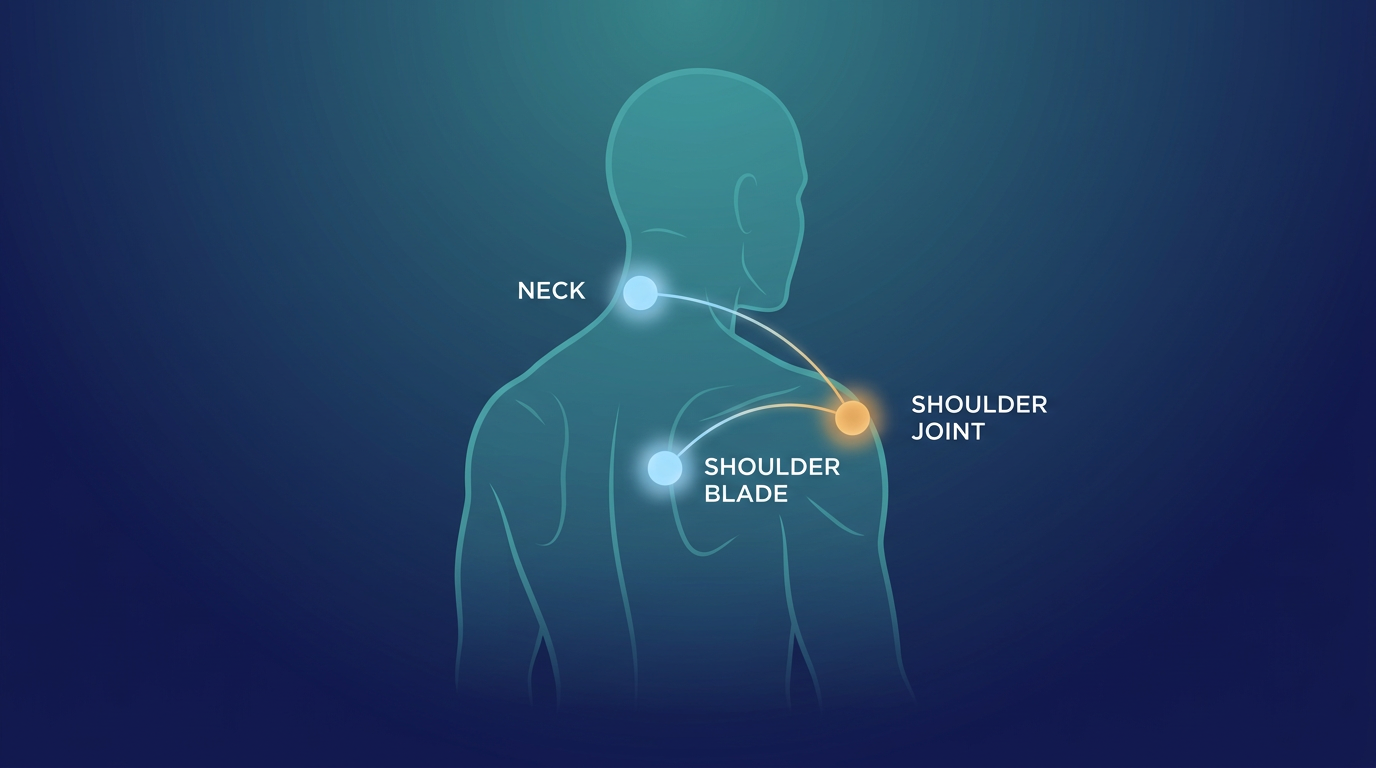
Tight muscles almost always involve other areas of the body.
When a joint isn’t moving through its full range, the muscles crossing that joint don’t get to release — they’re holding a position the joint is demanding. When one area stops contributing, other areas take up the slack and become chronically overworked. When the pattern has been running for years, the connective tissue remodels around it. The tissue isn’t misbehaving. It’s doing exactly what the situation requires.
Which means you can work a tight muscle as hard as you want, and the moment the client stands up and the joint still moves the way it moved before, the muscle tends to go right back to the old dysfunctional holding pattern.
This is the difference between treating the body like a lump of dough — kneading whatever feels tight or hurts — and treating it as a connected system where the painful area is often not the only place to look.
The whole body has to be addressed if you want the effects to last. Not because holistic sounds nice, but because the thing keeping your shoulder tight may not be in your shoulder — it can sit in the neck, the ribcage, or the way an old injury taught you to hold yourself. Those connections are regional and mechanical, and they’re worth checking before assuming the painful spot is the problem.
Pressure is a dial, not a method. Turning it up doesn’t change what you’re aiming at.
What Actually Produces Lasting Change
To be effective, you need both halves. Not one or the other.
You need the relaxation part. If your nervous system is guarded, your muscles will not release, no matter how much force is applied. Fighting a protective response with more pressure is a losing argument with your own physiology. In the work I do, calming the nervous system happens early and happens fast, using specific techniques for it — and clients often describe the session as deeply relaxing.
And you need intentional corrective work. Restoring how the joints move. Restoring glide between tissue layers that have stopped sliding freely past each other. Re-introducing the movement patterns that got shut down and compensated around. That part isn’t gentle drifting, and it isn’t brute force either. It’s specific.
Relaxation without correction feels wonderful and changes little. Correction without relaxation runs into a nervous system that won’t let go. Together, they hold.
What One Session Actually Changes
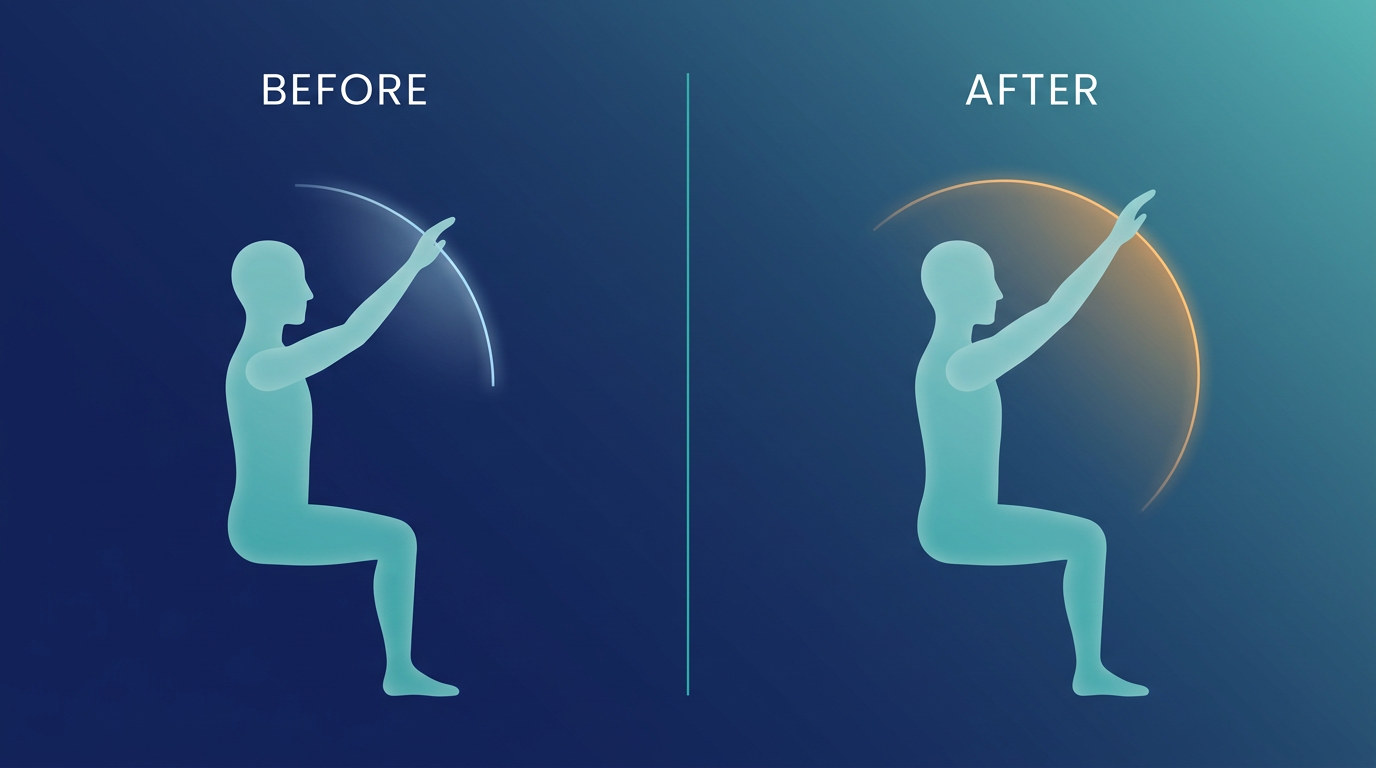
This is the part I’d rather show you than describe, which is why the work is structured to be checked in real time.
At the start, I test something measurable — a range of motion, a joint’s movement, a specific movement that provokes your pain. We establish where it is before anything happens.
Then, while I’m working, I’ll often ask you to put your hand on the area and feel it move. Before I work on it, and again after. You don’t have to take my word for what changed. You can feel the difference under your own hand.
At the end, we re-test the same movement we tested at the start.
What people commonly report after a single session:
- More range of motion
- Pain level noticeably down
- Feeling lighter
- Feeling calm
- Standing taller and more upright
- Breathing easier
- Moving more freely
- With acute injuries, reduced swelling
Notice how many of those are whole-body, not spot-specific. Someone comes in for a shoulder and leaves breathing more easily and standing taller. That isn’t a bonus — it’s the clearest evidence that the shoulder was never operating alone.
I won’t tell you one session resolves years of accumulated dysfunction. What one session does is change something you can verify yourself, and show you which direction the actual problem lives in.
Choosing an Orthopedic Massage in Los Altos
If you’re booking massage for relaxation, book Swedish, and enjoy it. That’s a legitimate reason to get on a table and I’d never talk anyone out of it.
But if you’re booking because something hurts, or because you’ve lost movement you used to have, or because you’ve been chasing the same knot for two years — the question to ask isn’t how deep the therapist goes. It’s whether they assess before they work, whether they re-test after, and whether they’re looking at your whole body or just the spot you pointed to.
Most of the people I work with have already tried both Swedish and deep tissue. What they tell me, fairly often, is that they’ve lost the desire to book those sessions — not because they were bad, but because they’re getting more out of a session built around resolving the dysfunction rather than managing the symptom.
That’s not a knock on either modality. It’s what happens when the thing driving the pain finally gets addressed.
Your Next Step
I’m Angelo dela Cruz. I’ve been doing this work since 1996, I’m CAMTC certified and an AMTA member, and before this I spent years as a Life Science Support Scientist supporting NASA — which is a long way of saying I’ve never been able to accept “it just works” as an explanation for anything.
If you’re in Los Altos or anywhere on the Peninsula and you’re tired of the pressure loop, come in for a session. We’ll test what’s actually restricted, work on the reasons rather than the symptoms, and re-test before you leave so you can judge the result yourself.
Fit Body Therapy · 600 Fremont Avenue, Los Altos, CA 94024
Frequently Asked Questions
Is deep tissue massage better than Swedish massage?
Neither is better than the other — it depends on what you’re getting the massage for, and on the practitioner giving it. In terms of affecting the soft tissues, deep tissue engages them much more intentionally, while most Swedish techniques are more superficial. For general relaxation, Swedish is well suited. For resolving pain and restricted movement, neither one on its own tends to produce lasting change, because pressure alone doesn’t address why the tissue became restricted.
Why does massage relief only last a few days?
Because the tissue is usually responding to something else — a joint that isn’t moving fully, or a compensation pattern elsewhere in the body. Releasing the muscle without changing what’s demanding that muscle stay tight means it returns to holding as soon as you get up and move.
Does deep tissue massage have to hurt to work?
No. Intense pressure produces a stress response — painful techniques have been associated with raised blood pressure during a session — and that sensation reflects intensity rather than tissue change. In controlled testing, the pain-threshold benefit of heavy massage lasted roughly fifteen minutes. At the extreme end, excessive pressure has been linked in published case reports to nerve and muscle injury.
Why do I need deeper and deeper pressure over time?
Most likely you don’t. The analgesic effect of heavy pressure is short-lived to begin with, and when pain has persisted for a long time the nervous system often becomes more sensitive rather than less. Aggressive pressure can reinforce that sensitivity. The answer usually isn’t more force — it’s addressing why the tissue is guarding.
How many sessions will I need?
It depends on how long the pattern has been in place and your specific situation. Typically, one session often produces a change you can feel and verify the same day, which also indicates how your body responds and what a realistic course looks like.
